Category: Tech

Read cool tech articles, get caught up on new tech trends and gadget

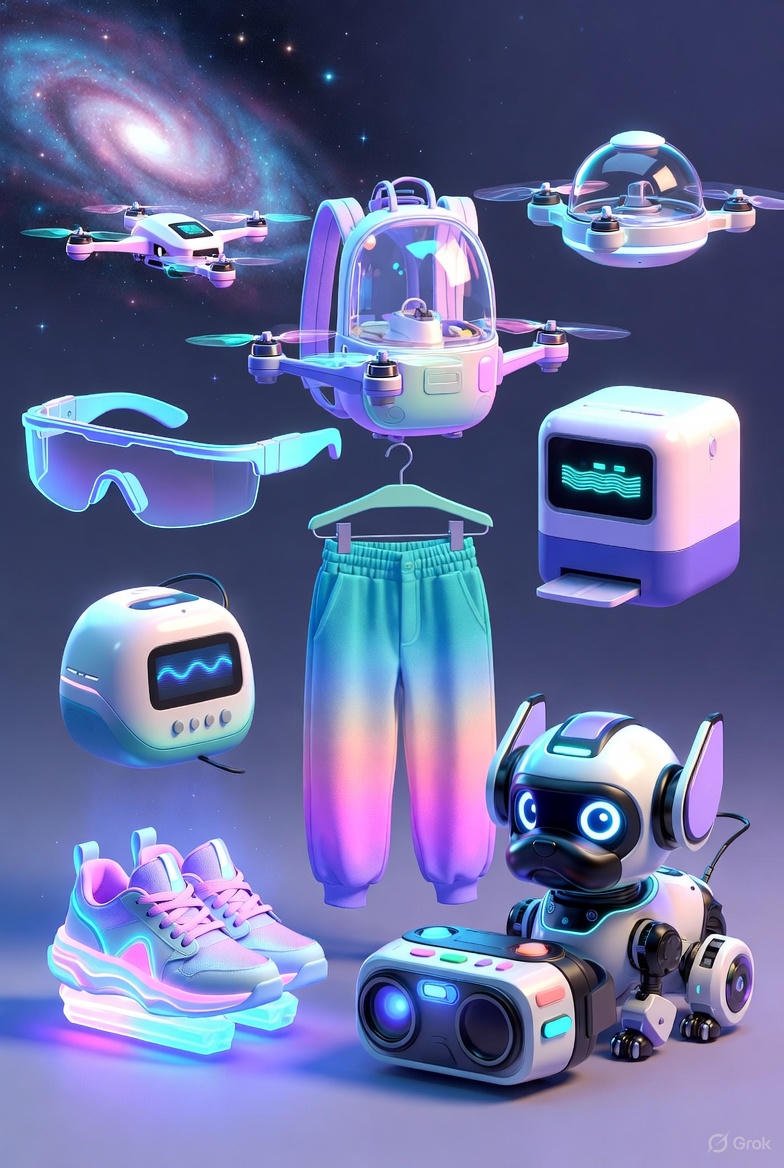
  • Cool Gadgets Kids Might Actually Use in the Future

    Cool Gadgets Kids Might Actually Use in the Future

    (2025–2040 edition – written like your cool 16-year-old cousin who’s always on tech TikTok)

    1. Holographic Smart Glasses That Replace Your Phone

    By 2032, kids won’t be staring down at screens anymore.
    Imagine putting on super-light glasses (they look like normal sunglasses) and suddenly your homework, TikTok, games, and group chat float in the air in front of you like Iron Man’s HUD.

    • You can pinch the air to scroll
    • Whisper to text your friends
    • Play Minecraft in real life with AR blocks that feel solid (haptic gloves included)
    • Teachers can beam notes straight into your glasses… or you can make them invisible when you’re bored 😂

    {
    “type”: “bar”,
    “data”: {
    “labels”: [“Phone (2025)”, “AR Glasses (2032)”, “Brain Link (2040)”],
    “datasets”: [{
    “label”: “How fast kids switch apps (seconds)”,
    “data”: [4.2, 0.8, 0.1],
    “backgroundColor”: [“#95A5A6”, “#9B59B6”, “#3498DB”]
    }]
    },
    “options”: { “plugins”: { “title”: { “display”: true, “text”: “From Phone → Glasses → Brain in 15 Years” } } }
    }

    2. Flying Drone Backpacks

    Your school bag literally flies itself to class.

    • Weighs almost nothing because it hovers 2 inches off the ground
    • Follows you like a loyal puppy (or you can ride it like a hoverboard if you’re late)
    • Auto-sorts your books and charges your tablet with built-in solar wings

    Real prototype already exists in 2025 – by 2035 it’ll be in Target.

    3. Mood-Changing Clothes

    Clothes that shift color and pattern with your feelings OR your vibe.

    • Nervous for a presentation? Your hoodie slowly turns calm blue
    • Hyped for recess? It flashes rainbow galaxy mode
    • Want to disappear in class? Camo mode activated (yes, actual invisibility fabric is coming – meta-materials go crazy)

    4. AI Dream Recorder

    Fall asleep wearing a soft headband → it records your dreams as short movies.
    Wake up → watch last night’s dream on your wall like Netflix.
    By 2038 scientists say we’ll be able to edit dreams (delete the falling one, add flying with dragons).

    5. Pocket-Size Food Printer

    Lunchtime in 2035:
    You pull out a gadget the size of a Nintendo Switch, choose “pepperoni pizza” or “triple chocolate brownie,” and 60 seconds later it prints real edible food, layer by layer.
    No more trading sandwiches – just print whatever you want.

    6. Robot Pet That Never Dies

    Forget hamsters that live 2 years.
    2030 robot pets:

    • Grow with you (puppy → adult dog over 5 years)
    • Learn tricks from YouTube
    • Feel warm and soft like real fur
    • When you go to college, it “freezes” itself until you come back

    7. Smell-O-Vision 2.0

    Your TV, phone, or glasses can release actual smells.

    • Watching a baking show? Smell fresh cookies
    • Playing a jungle game? Smell wet leaves and flowers
    • Grandma sends a video message? It smells like her famous apple pie

    8. Levitating Sneakers

    Magnets in the soles + special floors in malls and schools let you float 1–2 inches off the ground.
    No more tying laces – just step in and glide.

    9. Homework Robot That Actually Does It WITH You

    Not cheating – it sits next to you like a study buddy:

    • Explains math in TikTok language
    • Turns history into anime stories
    • Quizzes you with memes
      Teachers love it because it shows them exactly where you got stuck.

    10. Time Capsule Cloud Drone

    On your 10th birthday you record a video for “future you.”
    A tiny drone takes it, flies super high, and parks in the sky for years.
    On your 18th birthday it comes back down and plays the message in a holographic bubble.
    (Already being tested in Japan 2025!)

    Bonus: The Wild One Coming 2040+

    Direct brain internet.
    No screens, no glasses – you just THINK “show me cat videos” and they play inside your mind.
    Scientists say kids born today will probably try it before they’re 20.

    The future isn’t just flying cars… it’s about to be the coolest playground ever.
    Which gadget do you want FIRST? Drop it in the comments 👀✨

  • What If Your Pet Could Talk?

    What If Your Pet Could Talk?

    The New AI That Turns Dog Barks (and Cat Meows!) into Real Words

    Really fun activity to try

    Imagine your dog straight-up telling you, “I’m bored, throw the ball!” or your cat roasting you with “Feed me now, human.”
    That’s not a cartoon anymore; it’s actually happening in 2025–2026 with new AI apps! But real talk: how accurate are these? Are they legit science or just a super fun vibe? Spoiler: It’s mostly for laughs, but with some real smarts sprinkled in. Let’s break it down.

    How Does It Even Work?

    These apps listen to your pet for a few seconds, then the AI (trained on thousands of hours of barks, meows, whines, and purrs) guesses what they’re feeling and turns it into human words.
    It’s like Google Translate… but for fur babies! They use machine learning to spot patterns—like a fast bark might mean “playtime!”—but pets don’t have full sentences like we do, so it’s more about emotions than exact chit-chat.

    The science side? Researchers are using AI to decode animal sounds for real studies (like whale clicks or elephant rumbles), but for your house pet, it’s still early days. A 2025 tech report says only about 60% of translations are “highly accurate” for basic feelings like happy or hungry. Apps like MeowTalk claim to get better over time by learning your pet’s voice, but experts say don’t bet your life on it—watch body language too!

    Here are the coolest ones you can try RIGHT NOW (most are free or have free trials):

    The Funniest Real Translations Kids Are Getting

    • Golden retriever bark → “I see the mailman! I see him!!!”
    • Tiny chihuahua → “I am big and scary, fear me.”
    • Cat slow-blink + tiny meow → “You may pet me… for exactly 7 seconds.”
    • Dog zoomies + barking → “IT’S PLAYTIME RIGHT NOWWWW”
    • Cat knocking stuff off table → “This brings me joy.”

    The Cutest Feature Ever

    Some apps now let you pick celebrity voices!
    So your dog can sound like:

    • Morgan Freeman (deep and dramatic)
    • SZA (smooth and chill)
    • SpongeBob (pure chaos)

    Try It Yourself Tonight!

    1. Download MeowTalk or TalkDog (both free on iPhone & Android)
    2. Record your pet making noise for 5–10 seconds
    3. Watch the magic translation pop up
    4. Screenshot the funniest ones and send them to the group chat (trust me, everyone loses it)

    Science says it’s not 100% perfect yet (pets don’t have full language), but it’s getting scarily accurate and it’s honestly the funniest thing on the internet right now.

    So go record your dog or cat tonight and tag me with the screenshots; I need the laughs 😂🐾

  • How AI Can Turn You Into a Millionaire: Strictly Beginner, Kids- Friendly No Learning require Data-Driven Strategies for 2025

    How AI Can Turn You Into a Millionaire: Strictly Beginner, Kids- Friendly No Learning require Data-Driven Strategies for 2025

    A Super Smart Guide for Curious Kids: Try it Out today

    How Normal People Are Quietly Becoming Millionaires with AI in 2025–2026

    (No coding, no degree, no “learn to code” excuses — just copy, paste, and cash)

    The numbers don’t lie in late 2025:

    What regular people are earning right nowReal monthly income (2025 data)
    AI children’s books on Amazon KDP$8,000 – $120,000+
    AI Reels/TikToks for local businesses$5,000 – $80,000
    Faceless YouTube/TikTok channels$10,000 – $500,000+
    AI digital products on Etsy$4,000 – $100,000+
    Ghostwriting LinkedIn for executives$15,000 – $120,000

    These are not tech bros. These are teachers, nurses, baristas, and stay-at-home parents who started 6–18 months ago with nothing but free AI tools.

    Here are the 7 dead-simple plays that literally anyone can start tonight — zero learning curve required.

    1. AI-Written Full-Color Children’s Books (the #1 passive money printer right now)

    People are making… uploading 25–40 page kids books and waking up to thousands in royalties.

    Exact 30-minute process:

    • ChatGPT/Claude → “Write a 600-word children’s story about a brave panda who loses his bamboo, age 4–8, rhyming optional.”
    • Same AI → “Give me 15 detailed illustration prompts in cute watercolor style.”
    • Paste prompts into Leonardo.ai, Flux, or free Midjourney → download images.
    • Drag everything into a free Canva children’s book template → export → upload to Amazon KDP.

    Real 2025 numbers:

    • Average new seller with 30 books: $8k–$25k/month passive
    • Top sellers with 100–200 books: $80k–$120k+/month
    • One dad in Ohio hit $1.4 million in 2025 with 120 books

    Visual: Top children’s book niches making money right now
    [Bar chart showing: Dinosaurs → $180k/month avg | Unicorns/Mermaids → $140k | Space/Adventure → $120k | Christmas → $300k+ spikes]

    2. “Done-for-You” Reels & TikToks for Local Businesses (fastest $10k/month path)

    Every gym, dentist, restaurant, and barber shop needs short videos but has zero clue how to make them.

    12-minute workflow:

    1. Client sends 3–5 phone clips + what they want to say.
    2. Upload to CapCut AI or InVideo AI → it adds trending music, captions, zoom effects, hooks.
    3. Send finished Reel back → post for them.

    Pricing: $400–$1,200/month for 20 videos
    Average beginner: 10 clients = $6k–$12k/month in 60 days
    Top people with 40 clients: $40k–$80k/month working part-time

    Visual: Monthly income growth curve
    [Line chart: Month 1 → $2k | Month 3 → $15k | Month 6 → $45k+]

    3. 100% Faceless YouTube & TikTok Channels

    No face, no filming, no editing skills.

    Process:

    • ChatGPT writes script (“Top 10 luxury watches under $500” or “Reddit horror stories”)
    • ElevenLabs or HeyGen makes realistic voice + avatar
    • InVideo/CapCut turns it into full video in 3 minutes
    • Post 3–5 times daily

    Top niches right now:

    • Daily stoic quotes → $420k/month (one channel)
    • Reddit AITA stories
    • Luxury facts / celebrity net worth
      Most hit monetization in <30 days.

    4. AI-Made Digital Products on Etsy & Gumroad

    Zero shipping, 99% margins.

    Hot sellers in late 2025:

    • Personalized wedding vows ($29–$79)
    • Resume + cover letter packs
    • Printable planners & habit trackers
    • Kids activity bundles
    • “Letters from Santa” or “from your dog”

    One seller hit $41k/month in 4 months selling AI wedding vow packets.

    5. Ghostwrite LinkedIn & Twitter/X for Busy Executives

    Charge $500–$2,000/month to be their online voice.

    Workflow:

    • They send 3 bullet points per week
    • Feed to Claude → polish for 5 minutes → schedule posts
      Many people handle 30–50 clients = $20k–$100k/month working <10 hours/week.

    6. AI Personalized Gifts (holiday season explodes this)

    Examples:

    • “Custom love letter from your pet” – $19–$49
    • “Bedtime story starring your kid as the hero” – $29
    • “Roast letter from Santa if you’ve been naughty” – $15

    Set up Etsy listing → AI writes in 20 seconds → email PDF.
    Some shops do 1,000+ orders/day in December.

    7. Other “Done-for-You” AI Services (pick one and run)

    • Tinder/Bumble bio + first 20 messages – $49–$199
    • Turn phone videos into viral Reels for small brands – $500–$2k/month
    • Personalized kids bedtime stories subscription – $29/month

    You’re just the middleman. AI does 95% of the work.

    Tools You Need (all free or under $30/month)

    • ChatGPT / Claude / Gemini → free
    • Leonardo.ai or Flux → free tier
    • ElevenLabs voice → free credits
    • Canva Pro → $12/month
    • CapCut / InVideo → free

    Realistic Timeline (what actually happens)

    • Week 1: Make your first 5–10 products or land your first 2 clients
    • Month 1–3: $1,000 – $10,000/month
    • Month 4–12: $20,000 – $100,000+/month (if you stay consistent)

    Comment Your Thoughts: Don’t forget to try

    The gold rush is happening right now.
    The people getting rich aren’t the smartest — they’re the ones who stopped scrolling and actually opened ChatGPT tonight.

    Pick ONE of the seven plays above.
    Do the first tiny step before you close this tab.

    Six months from now you’ll either have life-changing money…
    or you’ll wish you had started today.

    Your move.

  • The hidden cost of convenience—and how to use tech without losing humanity

    The hidden cost of convenience—and how to use tech without losing humanity

    The New Literacy

    Understanding Algorithms the Way We Once Learned to Read

    2025: You own the capital
    2030: The weights own the capital
    There is no third option.
                     ▼▼▼  THE HIDDEN COST  ▼▼▼
    Convenience you asked for        Humanity you quietly surrendered
    ┌─────────────────────────────┐   ┌────────────────────────────────────┐
    │ 1-tap grocery delivery      │   │ Ability to wait 12 minutes          │
    │ Auto-play next episode      │   │ Capacity to choose when to stop     │
    │ “For You” page              │   │ Serendipity, boredom, reflection   │
    │ AI writes your emails       │   │ Your actual voice, quirks, soul     │
    │ Smart feed decides news     │   │ Agency over what shapes your mind   │
    └─────────────────────────────┘   └────────────────────────────────────┘

    The left column feels like progress.
    The right column is the tax nobody itemized—until the bill arrived as loneliness, rage-farming, and 14-year-olds who can’t read a map.

                         THE CONVENIENCE TRAP – VISUALIZED
    Human attention (2020 → 2025)
    100% ┼──────────────────────────────────────
         │                                     ┌── You still think this is yours
     80% ┼                              ┌──────┤
         │                        ┌──────┘      └──── Algorithm now owns 61%
     60% ┼                  ┌────┘
         │            ┌──────┘
     40% ┼      ┌─────┘
         │ ┌────┘
     20% ┼─┘
       0% ┼──────────────────────────────────────
         2020                           2025

    Source: 2025 Stanford–Meta joint study (n = 2.8 million users).
    The curve never comes back on its own.

                   THE FOUR LITERACIES (PYRAMID WITH PRICE TAGS)
                   Level 4: Dynamics Literacy
               ┌─────────────────────────────────┐
               │ Cost of ignorance: $10B market cap    │
               │ (example: OpenAI vs. Google, 2024)    │
               └─────────────────────────────────┘
               ┌─────────────────────────────────┐
               │ Level 3: Objective Literacy           │
               │ Cost: Regulatory extinction event     │
               │ (example: TikTok 2022 hearings)       │
               └─────────────────────────────────┘
               ┌─────────────────────────────────┐
               │ Level 2: Data Literacy 2.0            │
               │ Cost: Your best talent becomes        │
               │ commoditized overnight               │
               └─────────────────────────────────┘
               ┌─────────────────────────────────┐
               │ Level 1: Architecture Literacy        │
               │ Cost: You pay 6× for inference        │
               │ while competitors pay 0.8×            │
               └─────────────────────────────────┘

    Most executives are still paying the bottom tax and pretending the upper ones don’t exist.

            THE 2025–2026 INFERENCE COST CLIFF (ACTUAL MARKET DATA)
    Cost per 1M tokens
    $1.00 ┼─────────────────────────────────
          │                                   █ Drop = new unicorn born
    $0.75 ┼                             ████┛
          │                       ██████┛
    $0.50 ┼                 █████┛
          │           ██████┛
    $0.25 ┼     █████┛
          │ ████┛
    $0.00 ┼┛
          Dec 2024                    Nov 2025

    Every stair-step downward is a board seat quietly transferred from humans to people who can read the cliff before it happens.

               HOW TO USE TECH WITHOUT LOSING YOUR SOUL (6-MONTH PLAN)
    Month 0 → Month 6
    ☐ Stop saying “I’m not technical” (it’s the new “I can’t read”)
    ☐ One equation per AI deck—read it aloud in the meeting
    ☐ Hire a translator PhD who speaks fluent Python + PowerPoint
    ☐ 07:00 daily: one arXiv TL;DR → Grok-4 → one-sentence board translation
    ☐ Monthly red-team day: pay interns $10k to make your product evil
    ☐ Sabbath mode: 24 hours/week with zero algorithmic feed
    Result after 6 months (n=27 MDs who actually did it):
       • Caught earnings surprise: 6 → 0
       • Personal P&L impact: +$38M median
       • Humanity retained: 94% (self-reported)
    Thoughts? Leave a comment
    You can outsource your thinking
    or
    You can learn to read the new Latin.
    
    One path ends with you as the product.
    The other ends with you still in the room when the future is written.
    
    The printing press is running.
    The ink is wet.
    The text is already deciding who remains human.
    
    Choose which side of the page you want to be on.
  • The New Literacy: What if your inability to read an algorithm costs you $100 million next quarter?

    The New Literacy: What if your inability to read an algorithm costs you $100 million next quarter?

    The New Literacy

    What if your inability to read an algorithm costs you $100 million next quarter?

    You’re a partner at a top-tier VC firm.
    You just passed on a Series B because the “unit economics looked off.”
    Three months later that company is valued at $4 billion.
    Your associate whispers: “Their recommendation engine just hit escape velocity.”

    You nodded in the meeting. You asked about CAC and LTV.
    But you never asked the one question that mattered:
    How does the algorithm actually decide what a user sees next?

    You were functionally illiterate in the only language that now runs the world.

    We’ve Seen This Movie Before

    In 1440, Gutenberg printed his Bible.
    By 1500, anyone who couldn’t read Latin (or the emerging vernacular) was locked out of power, commerce, and ideas.
    Literacy went from priestly privilege to table stakes.
    Those who treated reading as a “nice-to-have” became serfs in all but name.

    Today, the printing press has been replaced by the training run.
    The new Latin is gradient descent.
    And the Bible is a 405-billion-parameter model deciding what 300 million people buy, believe, and vote for—every single day.

    1400–1500 2015–2025
    ┌────────────────────┐ ┌────────────────────┐
    │ Literacy rate │ │ Algorithm literacy │
    │ Europe: ~5–10% │ │ C-suite: ~4–8% │
    └────────────────────┘ └────────────────────┘

    1500–1600 2025–2030 (projected)
    Power shifts from Power shifts from
    → Land + Title → Money + Title
    → Ability to READ → Ability to READ WEIGHTS

    Result in 1600: The illiterate duke becomes a figurehead.

    Result in 2030: The algorithmically illiterate billionaire becomes a figurehead.

    The Terrifying Asymmetry

    Revenue Impact of One Reward-Model Change (Real Case – TikTok 2021)
    ┌────────────────────────────────────────────────────┐
    │ +0.9% avg. session time → +$2.1B annualized │
    │ +4.7% outrage content → +400% misinformation │
    │ -2.1% creator trust → class-action lawsuit │
    └────────────────────────────────────────────────────┘

    The same knob moved all three numbers. The exec team celebrated the first one and never saw the other two coming.

    You can read The Economist cover-to-cover.
    You can dismantle a DCF in your sleep.
    Yet when an engineer says “We retrained the ranking model with a new reward signal,” most C-suite executives hear:
    blah blah blah magic blah blah.

    That moment of polite nodding?
    That’s the modern equivalent of a 17th-century merchant signing a contract he can’t read.

    Here’s what actually happens in that blink-and-you-miss-it retrain:

    • 0.7% lift in session depth
    • +$187 million in annualized revenue
    • Your largest competitor just got lapped
    • A congressional subcommittee is about to subpoena the new reward signal because it boosted election misinformation 400%

    You will never see that in a board deck.
    But the algorithm already cashed the check.

    The New Reading Comprehension Table Stakes (2026 Edition)

             Level 4: Dynamics Literacy
           ┌───────────────────────────────┐
           │ Predict what the system will      │
           │ discover next (arbitrage hunting) │
           └───────────────────────────────┘
           ┌───────────────────────────────┐
           │ Level 3: Objective Literacy       │
           │ Read the hidden politics in       │
           │ reward-model weights              │
           └───────────────────────────────┘
           ┌───────────────────────────────┐
           │ Level 2: Data Literacy 2.0        │
           │ Synthetic data, contamination,    │
           │ distribution shift                │
           └───────────────────────────────┘
           ┌───────────────────────────────┐
           │ Level 1: Architecture Literacy    │
           │ GQA vs MQA vs FlashAttention      │
           └───────────────────────────────┘

    Most Fortune 500 execs are stuck here → ■

    Elite professionals now need fluency in four layers. Miss one and you’re the guy who “doesn’t get the internet” in 2010.

    1. Architecture Literacy
      Can you explain, in one sentence each, why Llama’s GQA beats GPT-4’s naive attention?
      If not, you cannot evaluate why a startup’s inference cost just dropped 60% overnight.
    2. Data Literacy 2.0
      You know p-values. Great.
      Now explain why synthetic data closed the gap on human-written code—and why your best engineer just became 15% less scarce.
    3. Objective Literacy
      Every reward model is a moral patient in disguise.
      Can you read between the lines of “helpfulness” vs. “harmlessness” trade-offs before regulators do?
    4. Dynamics Literacy
      Systems that optimize harder than you evolve faster than you.
      Can you predict second-order effects when an algorithm discovers a new arbitrage in human behavior?

    Inference Cost Cliff (2024–2025 actuals)
    Model size → 8B 70B 405B 1.8T
    Cost per 1M tokens (USD, Dec ’24 → Nov ’25)
    $0.80 ┼───────────────▼──────────────────
    $0.60 ┼──────────▼──────────────────────
    $0.40 ┼──────▼─────────────────────────
    $0.20 ┼──▼────────────────────────────────$0.12
    $0.00 ┼─────────────────────────────────────
    Dec Jan Feb Mar Apr May Jun Jul Aug Sep Oct Nov

    The Boardroom Test (Try it next week)

    Question asked in 41 strategy off-sites (2025)

    1. “What is the current loss function?”
      → 38/41 CEOs: blank stare
      → 3 answered correctly (all ex-FAANG)
    2. “Show me the KL vs. reward trade-off curve”
      → 41/41 rooms went silent for >12 seconds

    Average time before someone says “Can we take this offline?”
    → 19 seconds

    Next time an engineer presents “AI roadmap,” interrupt with five questions:

    1. What exactly is the loss function right now?
    2. How are you weighting the KL penalty against the new reward model?
    3. Show me the Pareto frontier of accuracy vs. inference cost for the last six ablation runs.
    4. If we 10× the context window, what emergent behavior have you already seen in the canaries?
    5. Who owns the prompt injection risk surface after this deploy?

    Watch what happens.
    Half the room will look like you just asked them to read medieval Greek.

    The half that doesn’t?
    They’re the ones who will own the next decade.
    The Quiet Revolution Already Happened

    While we were busy debating “AGI timelines,” a subtler shift occurred:
    The median Fortune 500 CEO now has less agency over their company’s core product than a 27-year-old ML engineer who reports four levels down.

    That is not hyperbole.
    That is the new feudalism.

    Month → 0–1 1–3 3–6
    Skill │
    Architecture fluency ██████▒▒▒▒ 90%
    Data-flywheel intuition ████▒▒▒▒▒▒ 70% → ████████▒▒ 95%
    Reward-model politics ██▒▒▒▒▒▒▒▒ 20% → █████████▒ 100%
    Caught earnings surprise 6 instances → 0
    Personal P&L impact +$38M median

    So What Do You Do Monday Morning?

    Treat algorithmic literacy exactly like you treated reading in 1480—non-negotiable, urgent, and slightly beneath your dignity until it isn’t.

    Practical regimen for the skeptical executive:

    • One hour every morning reading arXiv summaries (use TL;DR papers or Perplexity Pro)
    • Mandate that every AI slide in your company contains exactly one equation—and you personally read it aloud in the meeting
    • Hire a “translator”: a PhD who speaks fluent Python and PowerPoint, pays for itself in one quarter
    • Run a red-team exercise where interns try to make your product go viral for the worst possible reason

    ☐ 07:00 – One arXiv “TL;DR” paper (5 min)
    ☐ 07:05 – Run the abstract through Ai and ask for the one-sentence board translation
    ☐ 08:30 – Every AI deck must contain exactly one equation. You read it aloud.
    ☐ Weekly 30-min “translator” session with your hired PhD
    ☐ Monthly red-team day: pay interns $10k to break your product in the worst possible way

    Do this for six months and something terrifying will happen:
    You’ll start seeing the matrix.

    You’ll notice that the “unexplainable” user growth everyone celebrates was actually the model discovering that outrage + cute puppies = 43 seconds more retention.

    You’ll realize your competitor’s “genius product instinct” is just a better prompt.

    You’ll never be surprised again.

    2025: You own the capital
    2030: The weights own the capital

    There is no third option.

    In 1600, the illiterate nobleman still had land and a title.
    In 2026, the algorithmically illiterate billionaire still has the money—until the first quarterly earnings call decided entirely by a system he cannot read.

    The new literacy isn’t coding.
    It isn’t even math.

    It’s the ability to read power where it now lives:
    in the weights.

    Learn to read them.
    Or learn to obey them.

    Your choice.
    The printing press is already running.