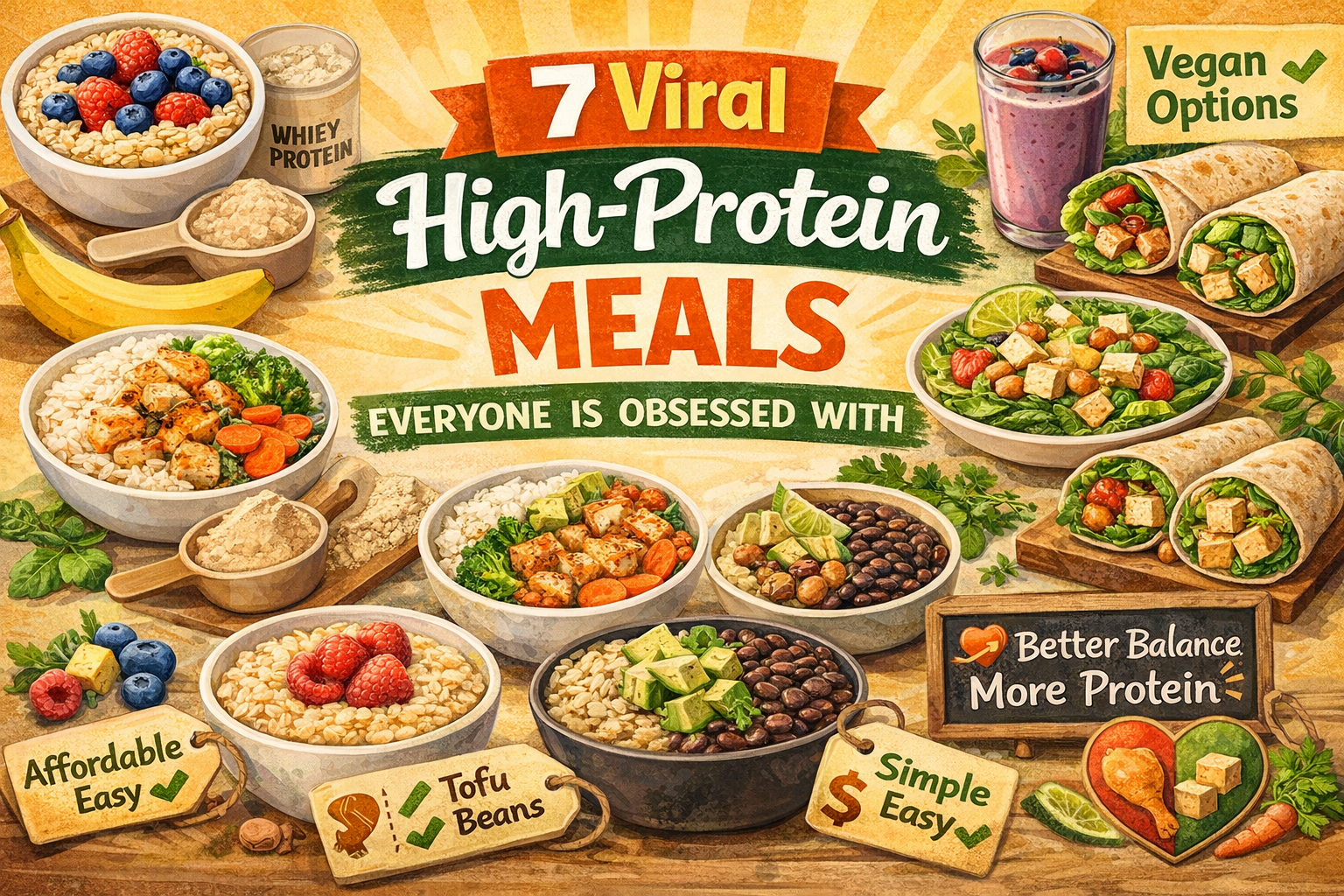
Quick 5-minute recipes that are simple, affordable, and flexible — including vegan options. No perfect diet, just better meals in less time.
Not everyone has time to cook full meals every day.
Some days you’re busy.
Some days you’re tired.
Some days you just don’t feel like it.
And that’s real.
So instead of trying to be perfect with food…
👉 focus on meals that are fast, simple, and still give you something better
Because even quick meals can:
- give you energy
- help you stay full
- improve how you feel
And if eating “healthy” feels expensive or hard to access…
that’s okay too.
You don’t need perfect meals — just better options when you can.
⚡ What Makes a Good 5-Minute Meal
A quick meal doesn’t have to be “perfect.”
Just aim for:
- something filling
- something with nutrients
- something realistic
Even small upgrades make a difference.
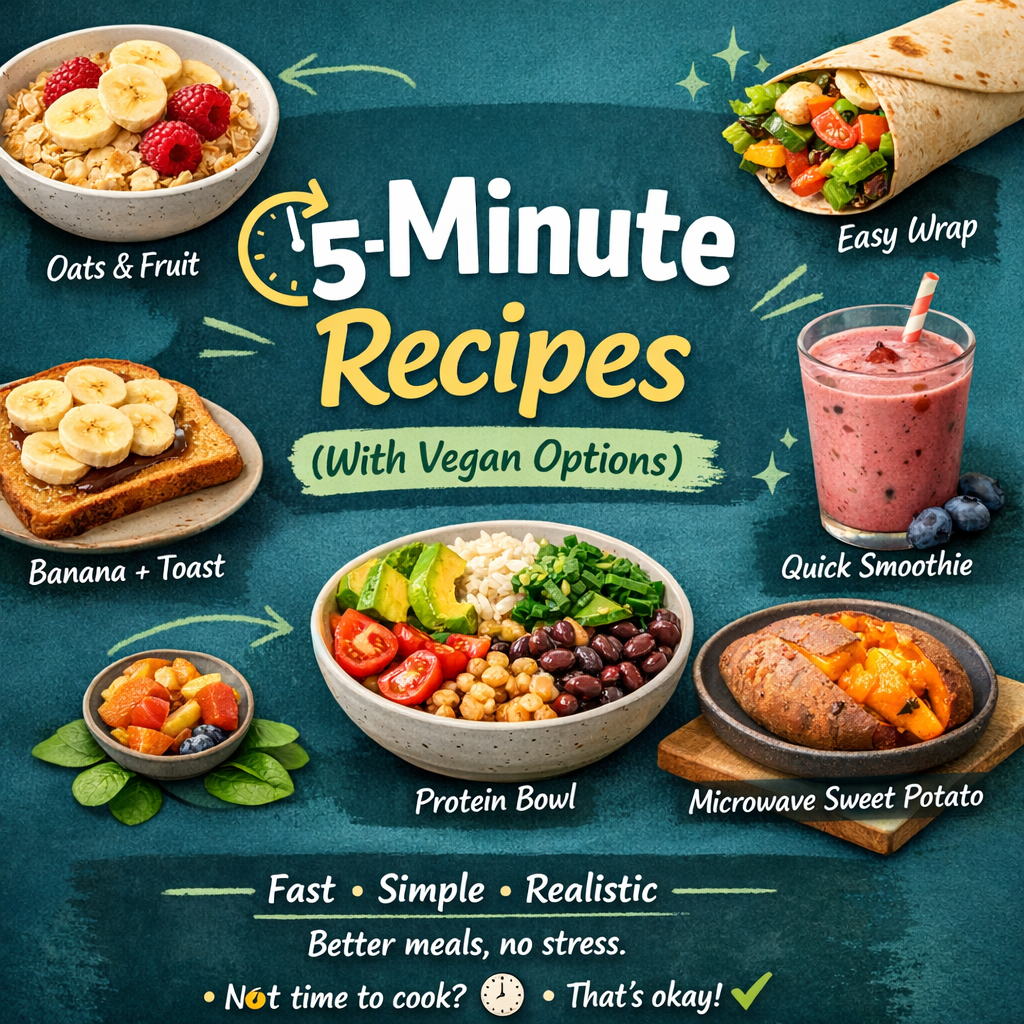
🍳 5-Minute Recipes (With Vegan Options)
🥣 1. Oats + Fruit Bowl
- Oats + banana or berries
- Optional: add a little dark chocolate
🌱 Vegan: use water or plant milk
👉 Cheap, filling, and quick
🍌 2. Banana + Toast Combo
- Toast + banana slices
- Optional: drizzle honey or add chocolate
🌱 Vegan: skip honey or use plant-based alternative
👉 Fast energy + satisfying
🥗 3. Simple Protein Bowl
- Rice + vegetables + protein
🌱 Vegan option:
- Beans, lentils, or tofu
👉 Use leftovers to make it even faster
🌯 4. Quick Wrap
- Wrap + whatever you have (protein + veggies)
🌱 Vegan option:
- Hummus + beans + vegetables
👉 Great for on-the-go
🥤 5. 5-Minute Smoothie
- Fruit + milk + optional protein
🌱 Vegan option:
- Use oat, almond, or soy milk
👉 No cooking needed
🍫 6. Dark Chocolate + Fruit Snack
- Small piece of dark chocolate + fruit
🌱 Vegan: most dark chocolate works (check label)
👉 Simple but effective
🍠 7. Microwave Sweet Potato
- Microwave 4–5 minutes
- Add simple toppings
🌱 Vegan: already vegan
👉 Very filling, very cheap
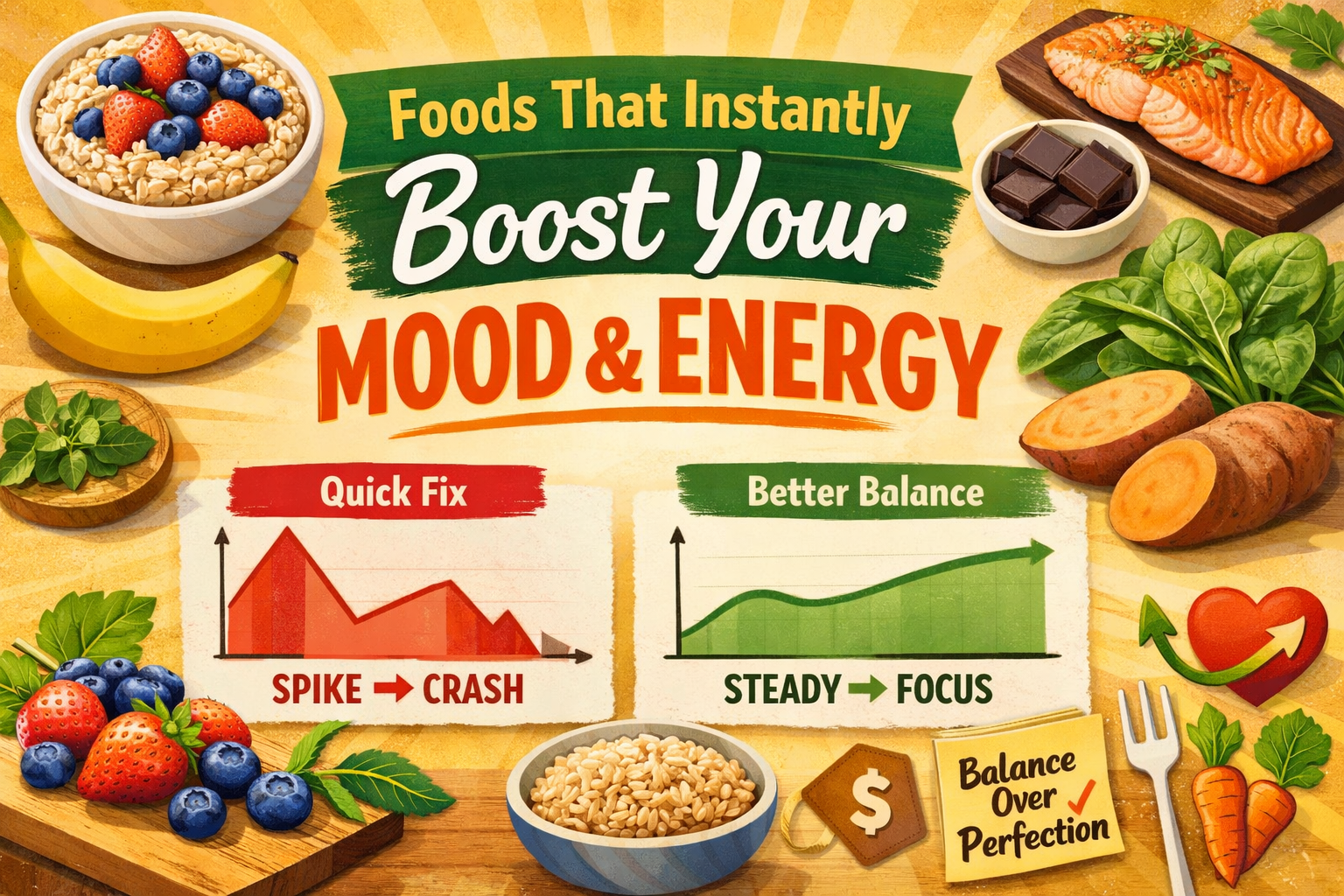
📊 Fast Food vs Quick Balanced Meal
| Option | Result |
|---|---|
| Skipping meals | Low energy |
| Junk snacks only | Quick crash |
| Simple balanced meals | Steady energy |
💰 Let’s Be Real About Time & Money
Not everyone has:
- time to cook
- money for perfect groceries
- energy to plan meals
That’s normal.
So instead of overcomplicating it:
👉 focus on what’s fast AND slightly better
Even:
- fruit + something filling
- leftovers + one upgrade
is enough.
⚡ Simple Go-To Combo
If you don’t want to think:
- Oats + fruit
- Banana + toast
- Rice + something
That’s it.
No pressure. Just options.
You don’t need long recipes.
You don’t need perfect meals.
You just need something better than doing nothing.
Because energy and consistency come from small actions…
not perfect ones.
🔥 The Overall Message
You don’t need a perfect routine
you just need quick, better options
Even simple meals like:
- oats
- fruit
- rice + something
can change how you feel
Small changes still count.
⚡ Keep in Mind
It’s not about eating perfect
it’s about eating better than before
one step at a time.
Remember…
You don’t need time to eat better
you just need better quick options
Even 5-minute meals like:
• oats
• fruit
• rice + somethingcan change your energy
Simple > perfect