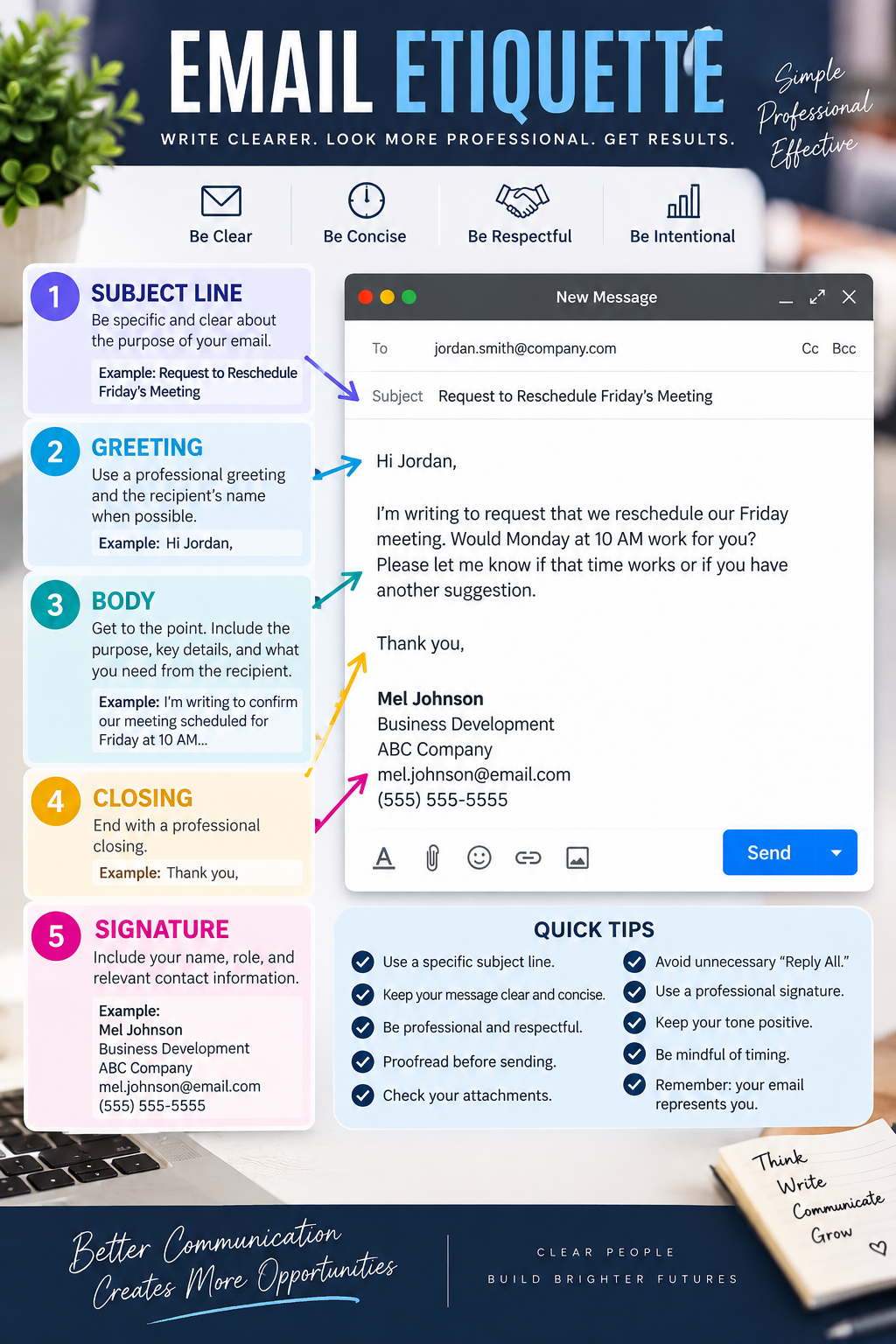
Email Etiquette: How to Write Clear, Professional Emails
Professional email does not need to be complicated. A good email is clear, respectful, concise, and easy to act on.
Whether you are communicating with a manager, coworker, client, instructor, or business partner, the structure of your email matters. The goal is simple: make your message easy to understand and respond to.
Here are the five essential parts of a professional email.
1. Subject Line
The subject line should tell the reader what the email is about before they open it.
Keep it specific and brief.
Weak:
Question
Better:
Question About Friday’s Meeting
Strong:
Request to Reschedule Friday’s 10 AM Meeting
A good subject line helps the recipient immediately understand the purpose of your message.
Rule: If someone can understand the purpose of your email from the subject line alone, you are doing it correctly.
2. Greeting
Start with a professional greeting.
Examples:
Hi Jordan,
Hello Ms. Smith,
Good morning, Michael,
When you know the person’s name, use it. Avoid overly casual openings such as:
Hey!!!
Yo,
What’s up?
The appropriate level of formality depends on your workplace and relationship with the recipient, but when in doubt, professional and simple is better.
3. Body
The body is where you communicate your message. Keep it direct and organized.
A professional email should answer three basic questions:
- Why am I writing?
- What information does the recipient need?
- What action, if any, do I need from them?
For example:
Hi Jordan,
I’m writing to confirm whether our meeting scheduled for Friday at 10 AM is still on the calendar. Please let me know if the time has changed.
Thank you,
Mel
Notice that there is no unnecessary explanation. The reader knows exactly why you contacted them and what you need.
Cut the fluff
Avoid filling your email with unnecessary sentences.
Instead of:
I hope you’re doing well. I just wanted to reach out because I was wondering if perhaps you might have some time available at some point to possibly discuss…
Write:
I’d like to schedule a time to discuss the project. Are you available Thursday afternoon?
Clear writing saves everyone’s time.
4. Closing
End your email professionally.
Common options include:
Best,
Mel
Kind regards,
Mel
Thank you,
Mel
Sincerely,
Mel
Choose a closing that matches the situation. “Best” and “Thank you” are versatile options for most professional communication.
5. Signature
Your email signature identifies you and provides relevant contact information.
A simple professional signature might look like:
Mel Johnson
Business Development
ABC Company
mel.johnson@email.com
(555) 555-5555
You don’t need a huge signature filled with unnecessary quotes, graphics, or multiple social-media links.
Keep it clean and relevant.
Example 1
Here’s how the five parts come together:
Subject: Request to Reschedule Friday’s Meeting
Greeting:
Hi Jordan,
Body:
I’m writing to request that we reschedule our Friday meeting. Would Monday at 10 AM work for you?
Closing:
Thank you,
Mel
Signature:
Mel Johnson
Business Development
ABC Company
That’s it.
Email Etiquette Rules to Remember
Before sending a professional email, check that:
- The subject is specific.
- The greeting is appropriate.
- The purpose is clear.
- The body gets to the point.
- The requested action is obvious.
- The tone is respectful.
- The email has been proofread.
- The closing is professional.
- The signature contains useful information.
- Attachments are actually attached.
The Bottom Line
Professional email etiquette is not about using complicated words or writing long messages. It is about respecting the reader’s time and communicating clearly.
A strong professional email should make the reader think:
“I know exactly what this person needs from me.”
Clear. Concise. Professional. That’s the standard.
Email Etiquette: How to Write Professional Emails That Get Results
Email is one of the most common forms of professional communication. Whether you are contacting a manager, coworker, client, instructor, or business partner, the way you write your email affects how your message is understood and how others experience working with you.
Professional email etiquette is not about sounding overly formal. It is about being clear, respectful, organized, and efficient.
A strong email should make it easy for the reader to understand why you are writing, what you need, and what they should do next.
The 5 Essential Parts of a Professional Email
1. Subject Line
Your subject line should tell the reader exactly what the email is about.
Too vague:
Question
Better:
Question About Friday’s Meeting
More specific:
Request to Reschedule Friday’s Meeting
Avoid leaving the subject line blank. A specific subject helps the recipient prioritize your message and find it later.
2. Greeting
Begin with a professional greeting.
Examples:
Hi Jordan,
Hello Ms. Smith,
Good morning, Michael,
Use the person’s name when appropriate. Avoid overly casual greetings such as “Yo,” “Heyyy,” or “What’s up?” in professional situations.
3. Body
The body contains your actual message.
Get to the point quickly. A useful structure is:
Purpose → Important details → Action needed
For example:
Hi Jordan,
I’m writing to confirm our meeting scheduled for Friday at 10 AM. Please let me know if the meeting time has changed.
Thank you,
Mel
The recipient immediately knows why you are writing and what you need.
Cut the Fluff
Professional does not mean lengthy.
Instead of:
I hope you’re doing well. I just wanted to reach out because I was wondering if you might possibly have some time available to discuss the project when you get a chance.
Write:
I’d like to discuss the project. Are you available Thursday afternoon?
Say what needs to be said, then stop.
4. Closing
End your message with a professional closing.
Common choices include:
Best,
Mel
Thank you,
Mel
Kind regards,
Mel
Sincerely,
Mel
For most workplace emails, “Best” or “Thank you” works well.
5. Signature
Your signature identifies you and provides useful contact information.
For example:
Mel Johnson
Business Development
ABC Company
mel.johnson@email.com
(555) 555-5555
Keep your signature clean. You generally do not need excessive graphics, inspirational quotes, or unrelated information.
Professional Email Example
Subject: Request to Reschedule Friday’s Meeting
Hi Jordan,
I’m writing to request that we reschedule our Friday meeting. Would Monday at 10 AM work for you?
Thank you,
Mel Johnson
Business Development
ABC Company
mel.johnson@email.com
This email works because it is specific, concise, respectful, and actionable.
10 Email Etiquette Rules to Remember
1. Use a specific subject line.
Tell the reader what the email concerns.
2. Start with an appropriate greeting.
Use the recipient’s name when possible.
3. Get to the point.
Don’t make the reader search for your purpose.
4. Keep paragraphs short.
Large blocks of text are harder to read.
5. Use a professional tone.
Be respectful without sounding unnecessarily formal.
6. Make your request clear.
If you need something from the recipient, say exactly what you need.
7. Proofread before sending.
Check spelling, grammar, names, dates, and important details.
8. Check your attachments.
If you mention an attachment, make sure it is actually attached.
9. Avoid unnecessary “Reply All.”
Only include people who need the information.
10. Remember that email represents you.
Your communication contributes to your professional presence.
Final Takeaway
Good email etiquette is simple:
Be clear. Be concise. Be respectful. Be intentional.
You do not need complicated language to sound professional. The strongest emails respect the reader’s time, communicate the purpose quickly, and make the next step obvious.
Professional email isn’t about writing more. It’s about communicating better.
Leave a Reply